

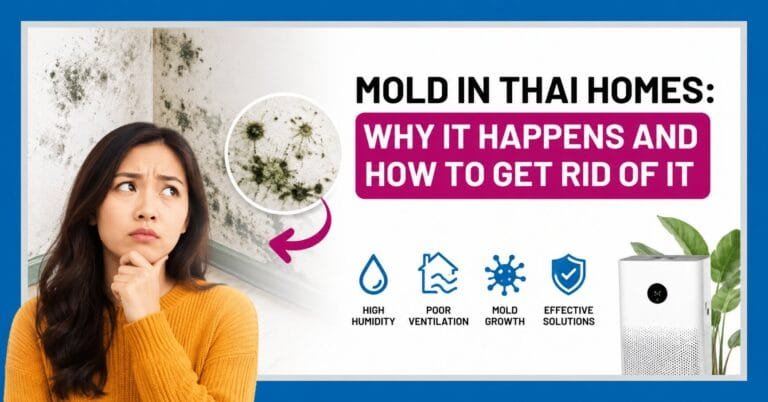
Mold in Thai Homes: Why It Happens and How to Get Rid of It
by Karl von Luckwald / June 5, 2026
You come back from a few days away, open the door, and there it is: that damp, musty smell.
Then you spot the black specks creeping along the bathroom ceiling, the back of the wardrobe, or the wall behind the sofa. If you live in Thailand, you have probably met mold more than once.
It is one of the most common household problems here, and it is not just unpleasant to look at. Mold can affect your health, damage your things, and in a rental, it can turn into a dispute with your landlord. Here is why it happens, how to deal with it properly, and how to stop it coming back.
So how to get rid of Mold in my home?
Most air purifiers are portable, allowing easy movement between rooms. However, using one unit for an entire house is challenging due to its limited cleaning capacity and the need for open space to circulate air effectively.
Why mold loves Thai homes
Is mold actually bad for you?
For a lot of people, yes. Breathing in mold spores can irritate your airways and trigger coughing, sneezing, a blocked or runny nose, and itchy eyes. If you have asthma or allergies, mold can make them noticeably worse. Infants, older adults, and anyone with a weaker immune system tend to react the most.
Not everyone notices a reaction, but persistent exposure is worth taking seriously, especially in a bedroom where you spend hours every night. Health agencies generally recommend keeping indoor humidity below 60%, and ideally between 40% and 50%.
How to get rid of mold, and keep it gone
1. Fix the moisture first. This is the part people skip, and it is the part that matters most. Find the source: a leaking pipe, a cracked seal around a window, condensation from the AC, or a room that never gets fresh air. If you only clean the mold without fixing the damp, it comes straight back.
2. Control the humidity. Run your AC or a dehumidifier, open windows and doors when the outdoor air is drier, and keep air moving through closed rooms. Aim to keep indoor humidity under 60%.
3. Measure it. You cannot manage what you cannot see. A simple air quality monitor shows your room’s humidity in real time, so you know when it is creeping into the danger zone and can act before mold appears.
4. Clean what is already there. For small patches, wipe the area with a suitable mold cleaner and dry it completely. Do not just paint over it. Painting traps the problem and it returns through the new surface.
5. Use an air purifier for what is in the air. A HEPA air purifier captures mold spores floating in your room, and the carbon filter helps clear that musty smell. That reduces what you breathe and can ease allergy symptoms. Be clear on what it does, though: a purifier cleans the air, it does not remove mold from a wall or fix the damp that caused it. Use it alongside humidity control and cleaning, not instead of them.
Renting? Know your rights
A lot of mold in Thai condos comes down to the building, not the tenant. If it keeps returning because of a leaking pipe, failed waterproofing, or constant condensation from poor design, that is often the landlord’s responsibility to fix rather than yours.
What your landlord actually owes you depends on your lease and the cause of the problem. If a landlord keeps ignoring damp or mold that is affecting your health, a property lawyer can explain where you stand before it turns into a bigger dispute. It is worth understanding your position early, while it is still a conversation and not a standoff.
When to call a professional
Small, surface-level mold is usually a job you can handle yourself. Call in a specialist when:
FAQ

Karl von Luckwald
Since moving to Thailand in 2019, Karl noticed the lack of scientific integrity in air purifier and water filter reviews. In response, he founded WE DO AIR to champion unbiased, science-based evaluations and empower consumers to make better-informed decisions.